Bacon Strip Embroidery Design
A Playful, Textured Bite of Personality
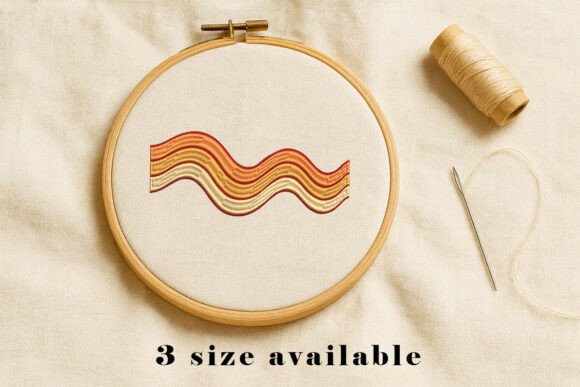
First impression? This isn’t just a bacon shape—it’s a wink in thread. The Bacon Strip Embroidery Design lands with cheerful irreverence: wavy, slightly exaggerated, and layered with stitch textures that mimic crisp edges and fatty marbling. It leans into food-themed charm without tipping into kitsch, thanks to smart spacing, balanced weight distribution, and intentional stitch variation—satin stitch for shine, subtle fill stitch for depth, and gentle running stitch accents that suggest texture, not clutter. As a machine embroidery design, it feels *designed*, not digitized from a clipart file. That matters when you’re building trust with customers who notice the difference between “handmade” and “hand-finished.”
Where It Shines—and Where It Needs a Second Look
I tested this on a custom embroidered tote bag for a local café’s weekend pop-up: natural canvas, medium-weight, lightly textured. The Bacon Strip Embroidery Design held up beautifully—its curves flowed with the fabric drape, and the layered stitches gave dimension without stiffness. It also worked cleanly on a baby t-shirt (100% cotton jersey), but only with tear-away stabilizer and reduced top tension. On that same fabric, I’d hesitate for a full chest placement on a newborn onesie—the wavy outline has gentle curves, but tight corners near the collar seam would need careful hooping and possibly slight digitizing tweaks.
For sweatshirt embroidery or polo customization, it’s a strong candidate—especially centered on the left chest or back yoke. Its scale reads clearly at 3.5"–4.5", and the stitch density avoids excessive bulk. On caps? Proceed with caution. The curve of the bacon strip mirrors a cap’s dome better than most food motifs, but avoid placing it over the front panel’s high-stitch-density zone unless you’ve verified the file’s underlay and pull compensation. Test it on scrap cap fabric first—stabilizer choice here is non-negotiable.
As an embroidered patch, it’s charming and cohesive. The wavy shape lends itself well to heat-seal or sew-on backing, and the color-blocking potential (crispy brown, soft pink, creamy white threads) makes it easy to match brand palettes. For tea towels or kitchen aprons? Yes—but keep thread colors wash-fast and avoid dense satin-heavy areas where repeated laundering could cause fraying over time.
Fabric & Function: Know When to Pause
This design walks a fine line between playful and practical. On thin fabrics like lightweight voile or rayon challis? It’ll show through unless you use cut-away stabilizer and moderate stitch density. On dark fabric, contrast becomes critical: cream or pale gold thread won’t read as “bacon” without careful color testing—try a warm tan or muted terracotta instead. Stretchy knits demand extra stabilization and slower stitching speeds; the wavy line can distort if the fabric shifts mid-run.
Curved surfaces (like pillow covers or mugs with fabric sleeves) benefit from its organic flow—but avoid tight corners or seams unless you’ve pre-tested hoop alignment. And while it’s delightful on nursery decor or holiday gifts (think “Bacon & Eggs” stocking stuffers), remember: baby embroidery requires ultra-soft threads and minimal surface texture. Trim jump stitches carefully, and skip any metallic or novelty threads for infant wear.
What It Adds to Your Craft Business—Beyond the Stitch
For Etsy sellers and small shop owners, the Bacon Strip Embroidery Design is quietly strategic. It’s niche enough to stand out in foodie, brunch, or dad-joke markets—but broad enough to cross over into wedding favors (“Bacon & Bride”), teacher appreciation gifts, or boutique coffee merch. Customers respond to its warmth and wit, especially when stitched cleanly on quality fabric. That perceived care elevates your handmade product from “cute” to “curated.”
It also works hard in digital product previews: drop it into a printable mockup of a tote bag or sweatshirt, and it reads instantly. No caption needed. That clarity boosts buyer confidence—and reduces post-purchase questions about scale or legibility. For commercial embroidery projects, it scales reliably across garment types, assuming your digitizer confirmed consistent underlay and thread pathing. Just verify licensing before bundling it into a digital embroidery file pack or offering it as part of a subscription service.
Designer Notes You’ll Actually Use
- Always test first: Run the Bacon Strip Embroidery Design on scrap fabric matching your final project’s weight, stretch, and color.
- Check thread color contrast: What reads as “crispy” on white may vanish on charcoal—test both light and dark backgrounds.
- Review stitch density: If your machine flags high density, reduce fill stitch % slightly rather than shrinking the entire design.
- Confirm hoop size: Its natural width fits standard 4x4 hoops, but double-check the file’s outer dimensions before nesting multiple designs.
- Inspect small details: Zoom in on the “fat” sections—are those layered textures readable at 3"? Or do they blur into a solid block?
- Mock it in black and white: Ensures visual impact holds without color crutches.
- Use proper stabilizer: Tear-away for stable wovens, cut-away for knits, and heavy cut-away for textured or unstable fabrics.
- Verify usage rights: Confirm whether the Bacon Strip Embroidery Design permits commercial use of finished products—and whether resale of the digital embroidery file itself is allowed.
Final Thought: A Design That Earns Its Place
This isn’t filler. The Bacon Strip Embroidery Design carries personality, purpose, and practicality in equal measure. It fits naturally into custom apparel, personalized gifts, and small-batch merchandise—not because it’s trendy, but because it’s thoughtfully constructed for real-world use. Whether you’re stitching for joy, gifting with humor, or building a craft business around memorable details, it delivers more than a smile. It delivers confidence—in your stitch, your fabric, and the quiet professionalism of a design that knows exactly what it is, and what it’s meant to do.