Christmas String Light Embroidery Set
A Designer’s First Look: Festive, Friendly, and Fit for Real Projects
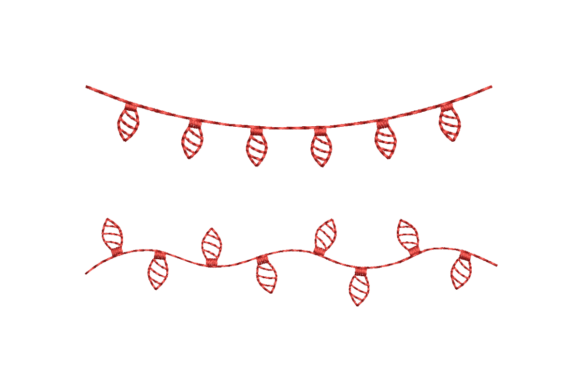
When I opened the Christmas String Light Embroidery Set, what struck me first wasn’t just the holiday cheer—it was how immediately usable it felt. Two clean, balanced designs—each sized at 3.5" and 4.5"—arrive in PES, DST, JEF, and VP3 formats. No fluff, no extra graphics, no confusing layers. Just two machine embroidery designs that look like they were drawn by hand but digitized with care: soft curves, intentional spacing between bulbs, and a gentle rhythm that suggests light—not electricity. This isn’t a busy motif screaming for attention. It’s the kind of embroidery file that whispers “cozy Christmas” while still holding its own on a tote bag or baby onesie.
Where It Shines (Literally and Practically)
I tested the Christmas String Light Embroidery Set on a natural linen tea towel, a midweight cotton sweatshirt, and a twill-lined embroidered patch—and each time, it landed right. On the towel, the running stitch base and subtle satin-stitched bulbs gave texture without bulk. On the sweatshirt, it stayed crisp and legible even over the fabric’s slight nap. As a patch, it held shape beautifully after heat-sealing and washing. That tells me this set is built for real-world craft business needs: Etsy sellers can list it confidently as a ready-to-embroider asset; small shop owners can use it across kitchen linens, nursery decor, and boutique apparel without redesigning.
It works especially well for personalized gifts—think monogrammed pillow covers with one string light design tucked beside the initials, or a set of matching aprons for a holiday baking class. Because the layout is horizontal and gently arcing, it flows naturally across curved surfaces like caps or sleeves, provided you hoop carefully. And for handmade product listings? These designs translate cleanly into printable mockups—no pixelation, no awkward cropping. The visual personality is warm, nostalgic, and quietly professional—not kitschy, not overdesigned, just genuinely festive.
Where to Pause and Plan Ahead
This isn’t a “stitch-and-forget” design on every surface. On thin or highly stretchy fabrics—like lightweight jersey baby onesies—I recommend testing with tear-away + cut-away stabilizer combo. The fill stitch areas around each bulb are dense enough to pucker if unsupported. On dark fabric, check thread color contrast early: lighter metallic or ecru threads lift the design beautifully, but standard white can fade into charcoal or navy unless you add an underlay or adjust density in your software.
For curved or layered garments—like structured caps or double-layered tote bag straps—hoop size matters. At 4.5", the larger version pushes the edge of a standard 5x7 hoop. Don’t force it. If your machine struggles with tight corners or starts skipping stitches near the ends, scale down slightly or reposition. Also, avoid placing either design directly over seams or thick hems unless you’re willing to float stabilizer underneath. And while the bulbs read clearly at full size, shrinking below 3" risks losing definition—especially in the tiny gaps between lights. This isn’t an applique design, so don’t expect raw-edge dimensionality; it’s a flat, refined stitch-out best appreciated at its intended scale.
What It Adds to Your Finished Product—Beyond the Stitch
Using the Christmas String Light Embroidery Set elevates perceived value without demanding premium pricing. Customers notice the balance—the way the lights aren’t perfectly uniform, the slight variation in bulb size that mimics real vintage strings. That subtlety builds trust: it says “handmade thoughtfulness,” not mass-produced clip art. For craft businesses, that translates to repeat buyers and better photo reviews. For Etsy sellers, it means fewer questions about “does it look like the picture?” because the stitch clarity holds up—even in natural light photos.
It also supports brand consistency. Whether you’re embroidering a batch of holiday sweatshirts for your small shop or building a cohesive line of nursery decor, this set delivers tone without repetition. You can pair it with simple script fonts or minimalist borders and never feel like you’re leaning too hard on trend. And because it’s not overly detailed or fussy, it doesn’t compete with other elements—making it ideal for layered projects, like a tea towel with a small string light motif beside a stitched recipe card.
Designer Notes You’ll Actually Use
- Always test on scrap fabric first—especially if using textured weaves or blends.
- Review stitch density in your embroidery software before stitching on delicate items like baby clothes.
- Confirm hoop size compatibility: both designs fit comfortably in a 5x7 hoop, but verify clearance on your specific machine.
- Inspect small details at 200% zoom: check bulb separation and thread jumps before sending to the machine.
- Test black-and-white mockups to assess contrast and silhouette readability.
- Use appropriate stabilizer: medium-weight cut-away for knits, tear-away for stable wovens, and fusible for patches.
- Verify licensing terms before selling finished items or bundling the digital embroidery file—you’ll need to confirm commercial use rights directly with the seller.
- Compare light and dark fabric backgrounds in your design preview to anticipate thread visibility.
Final Thought: A Quietly Reliable Holiday Asset
The Christmas String Light Embroidery Set won’t wow with flash—but it earns respect through reliability. It’s the kind of embroidery file you keep in your quick-access folder for last-minute custom apparel orders, holiday markets, or when a client asks, “Can you make it feel special, but not overwhelming?” It balances simplicity and charm, precision and warmth. For designers, sellers, and makers who value clean execution over cluttered novelty, this set isn’t just seasonal decoration—it’s a thoughtful, functional piece of your design assets library. And in a season full of noise, that kind of quiet confidence is rare—and valuable.