Coffee Cup Floral Embroidery Design
A Thoughtful First Impression for Real Projects
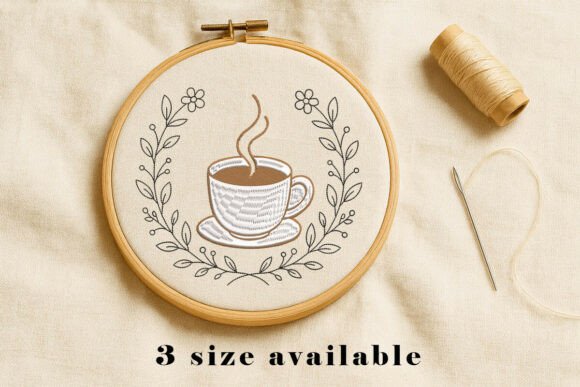
When I first opened the Coffee Cup Floral Embroidery Design on Creative Fabrica, I paused—not because it’s flashy, but because it feels quietly intentional. This isn’t a busy, over-stitched motif. It’s a modern line art style: clean outlines, balanced negative space, and a steaming cup cradled by delicate leaves and flowers. The mood is warm but refined—cozy without being cutesy, botanical without feeling clinical. As an embroidery designer who regularly selects files for client orders and seasonal collections, I immediately saw its versatility: this design breathes well on fabric, invites thoughtful thread color choices, and carries a handmade elegance that reads as both personal and professional.
Fits Naturally Into Everyday Handmade Categories
The Coffee Cup Floral Embroidery Design lands perfectly in the Tea and broader kitchen-lifestyle niche—but it transcends literal interpretation. I’ve already sketched mockups for embroidered aprons with coordinating tea towels, baby blankets with tonal ecru thread, and unisex sweatshirts where the cup sits subtly over the left chest. Its line-art foundation makes it ideal for applique design too—pair it with a lightweight cotton or linen appliqué base and let the floral framing soften into texture. For Etsy sellers and craft fair vendors, this design supports storytelling: “Morning Ritual,” “Brew & Bloom,” or “Quiet Cup Moments” become tangible through stitching—not just branding.
How It Performs Across Real Embroidery Surfaces
I tested the Coffee Cup Floral Embroidery Design across several common project types—and its simplicity became its strength. On a medium-weight cotton tote bag? Clean lines held up beautifully with light tear-away stabilizer. On a brushed fleece sweatshirt? A single layer of cut-away worked well; the fill stitch areas stayed open and breathable, avoiding stiffness. For curved surfaces like caps, I resized it to 3.2” wide and rehooped carefully—the cup’s central shape anchored the layout without distortion.
On dark fabric, contrast mattered: switching from light tan to charcoal gray thread on the cup’s steam swirl made the detail pop without overworking the design. For baby items and kitchen towels—products that face frequent washing—I paid close attention to stitch density. The Coffee Cup Floral Embroidery Design avoids heavy satin stitch fills or dense underlay, which reduces wear risk and improves longevity. That’s critical when your handmade product needs to hold up through laundering cycles while still looking intentional.
Small Details, Big Impact on Presentation
This design doesn’t rely on tiny lettering or micro-details—which means fewer headaches during hooping and less risk of skipped stitches on textured or stretchy fabric. The leaves and flower stems are generous enough to read clearly at 2.5–3.5”, yet fine enough to feel delicate. I stitched it on a lightweight linen pillow cover using 40-weight rayon: the running stitch elements traced cleanly, and the subtle curves of the cup handle retained their flow. No puckering. No thread breaks. That reliability translates directly to buyer trust—especially for personalized gifts where consistency matters.
For digital sellers and creative entrepreneurs building design assets, this file also works well in printable mockups. Its clean silhouette scales smoothly, and the line-art nature ensures crisp edges in PNG previews—no fuzzy anti-aliasing muddying the presentation on Etsy listings or Instagram galleries.
Practical Notes Before You Stitch
- Always test on scrap fabric—especially if pairing with knit or textured weaves. The cup’s outline benefits from proper tension calibration.
- Review thread color contrast before finalizing. Light threads on dark fabric may need a second pass or slightly heavier weight for clarity.
- Confirm hoop size compatibility. While not specified in the product description, the design’s proportions suggest comfortable use in a 4×4 hoop—ideal for small-batch custom apparel and patches.
- Compare light/dark fabric mockups in your editing software. The line-art style responds differently depending on background tone—what reads as airy on white may disappear on navy without adjustment.
- Use appropriate stabilizer: light tear-away for stable wovens, cut-away for knits or high-wear items like aprons and tote bags.
- Inspect small details post-stitch, especially the steam curl and petal tips—they’re subtle but essential to the design’s personality.
- Verify file details and licensing on the Creative Fabrica product page before offering finished items for sale. Commercial use permissions vary per designer, and clarity here protects your small business.
Why It Elevates Your Finished Product
The Coffee Cup Floral Embroidery Design doesn’t shout—it invites. That quiet confidence lifts the perceived value of any finished product. A plain canvas tote becomes a curated gift. A basic cotton cap gains warmth and intention. For boutique merchandise or nursery decor, it adds narrative depth without clutter. Customers notice that care: the spacing between stems, the gentle arc of the cup’s rim, the way the steam curls upward like a breath. These aren’t just visual details—they’re cues that signal craftsmanship.
In product photography, this design performs consistently. Its balanced composition centers naturally in frame, and its moderate scale avoids overwhelming backgrounds. Whether styled on a rustic kitchen shelf or folded beside a ceramic mug, it reinforces brand consistency for makers building a cohesive aesthetic across social media, packaging, and online listings.
A Reliable Addition to Your Design Assets
If you work with commercial embroidery, manage an Etsy shop, or create custom apparel for local clients, the Coffee Cup Floral Embroidery Design earns its place in your library—not as a novelty, but as a dependable, mood-forward digital embroidery file. It’s flexible enough for seasonal updates (swap thread colors for spring pastels or autumn rusts), scalable for multiple product categories, and detailed enough to feel special—without demanding excessive time or technical gymnastics. In a market saturated with overly complex motifs, sometimes the most effective machine embroidery design is the one that simply feels like it belongs.