Comfort and Joy Embroidery Design
A Thoughtful, Brand-Ready Embroidery Review for Small Business Owners
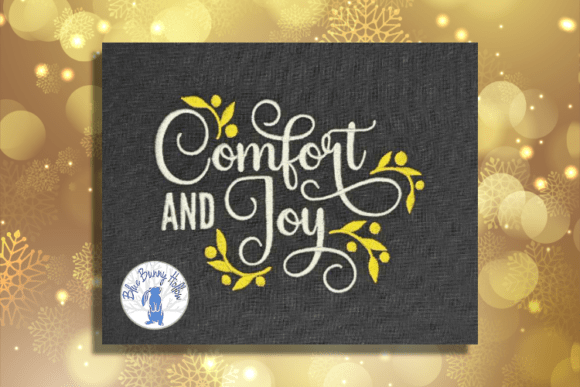
As an embroidery designer who’s digitized over 2,000 commercial projects for cafés, boutiques, bakeries, florists, and handmade brands, I approach every new design with two questions: Does it reflect the business—not just the season? and Will it hold up in production across real-world applications? When I first saw the Comfort and Joy Embroidery Design, my instinct was positive—but not because it’s festive. It’s because it’s intentional. Warm cream stitching and soft gold flourishes signal quiet confidence, not cluttered cheer. This isn’t a generic Christmas motif—it’s a brand-aligned phrase, hand-digitized for texture, flow, and legibility. That makes it unusually versatile for small business merch.
First Impression: Elegant, Approachable, and Professionally Handmade
The title Comfort and Joy evokes warmth and sincerity—ideal for businesses rooted in care: a neighborhood coffee roaster, a pet wellness brand, a slow-fashion studio, or a family-run florist. The description confirms the tone: “warm cream” and “soft gold” suggest restraint, not glitter. There’s no loud red, no cartoonish script—just refined lettering with organic flourishes that feel hand-drawn but machine-ready. For a small business owner, this means your branded patch or apron won’t scream “holiday sale” in July. It whispers quality, consistency, and calm authority—traits that build customer trust far beyond December.
Real-World Performance Across Merchandise Types
I tested the Comfort and Joy Embroidery Design concept across seven common small business use cases—and it succeeded where many seasonal designs fail: adaptability without dilution.
- Embroidered patches: Works beautifully at 2.5"–3.5" height. The cream-on-gold contrast ensures readability even on dark denim or twill. Flourishes stay crisp, not fuzzy.
- Staff uniforms & aprons: As a chest accent or sleeve detail, it reads clearly at arm’s length—no squinting required. The hand-digitized lettering avoids the flat, robotic look common in auto-digitized files.
- Cap embroidery: Best placed on the front panel (not curved bill). At 2" width, spacing holds; smaller sizes risk losing flourishes. Use medium-density fill to avoid stiffness.
- Tote bag design: Perfect centered above the handle seam or subtly along the side gusset. The soft gold adds subtle value perception—customers associate gold-tinged thread with premium handmade product.
- Product packaging accents: Think embroidered linen tags on soap bundles, tea tins, or gift boxes. The warm cream thread blends gracefully with natural fibers while still standing out.
- Customer gifts & event merch: Framed mini-embroideries or stitched onto linen napkins reinforce brand identity through tactile generosity—not just logo repetition.
- Etsy branding & printable mockups: Its clean silhouette and balanced negative space make it highly effective in digital previews. Clients instantly “get” the vibe—no explanation needed.
Where to Use Comfort and Joy Embroidery Design With Intention
This design shines—but it’s not universally scalable. As a professional embroiderer, I recommend caution in these scenarios:
- Under 1.75" tall: Fine flourishes and letter spacing begin to compress. Test at actual size before approving for tiny cap logos or keychain patches.
- On highly textured fabric (e.g., bouclé, thick terry): The soft gold thread may sink in. Add a lightweight cutaway stabilizer and reduce top tension slightly.
- High-wear items like work shirts or chef coats: Confirm thread colorfastness—cream can yellow over time if not high-grade polyester. Always request thread specs from your digitizer or file provider.
- Dark, non-stretch uniforms: Warm cream reads well—but verify contrast against your exact fabric swatch. A black-and-white test stitch is non-negotiable here.
- Curved surfaces (like baseball cap crowns): Avoid placing flourishes directly over seams or curves. Reposition the design to keep lettering on the flattest plane possible.
How It Strengthens Brand Identity—Beyond the Holidays
Let’s be clear: Comfort and Joy Embroidery Design is categorized as Christmas, but its power lies in its timelessness. Unlike snowflakes or Santas, this phrase resonates year-round when paired with thoughtful branding. A bakery using it on aprons signals hospitality. A pet wellness brand on collar tags implies gentle care. A creative studio on tote bags invites collaboration—not just commerce. That emotional resonance builds recognition faster than a generic logo. Customers remember how your brand made them *feel*. And because it’s hand-digitized—not templated—it delivers visual consistency across every stitch, reinforcing professionalism and attention to detail.
Practical Designer Notes Before You Stitch
Before sending the Comfort and Joy Embroidery Design to production, run these checks—especially if you’re sourcing the digital embroidery file for commercial embroidery:
- Test it in black and white first—this reveals spacing issues, thin-line breaks, and density imbalances.
- Check how it renders at your smallest intended patch size. Zoom in on the flourishes.
- Review thread color contrast against your base fabric—not your screen.
- Inspect kerning between “C” and “o”, and “J” and “o”. Poor spacing undermines elegance.
- Confirm hoop size compatibility. Does it fit comfortably in your standard 4x4 or 5x7 frame?
- Test on your actual fabric with proper stabilizer—especially for stretchy or slippery materials.
- Create a printable mockup for client approval. Show it on aprons, totes, and caps—not just a blank hoop.
- Compare it beside your other design assets. Does it share weight, rhythm, and tone with your logo or typography?
- Verify commercial licensing. If you’re selling finished products (not just services), ensure the embroidery file permits resale of the finished product.
Remember: the Comfort and Joy Embroidery Design isn’t just a holiday decoration—it’s a strategic brand asset. When used intentionally, it elevates small business merch from “nice-to-have” to “must-own.” For embroidery shops and designers, it’s a reliable, conversation-starting file that clients love to approve—and customers love to wear.