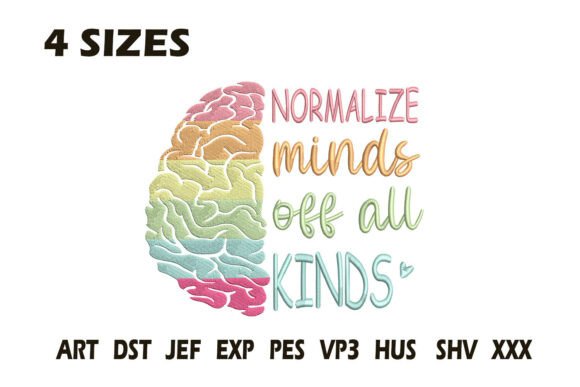
Normalize Minds Embroidery
A Whimsical Touch That Stitches With Intention
As an embroidery designer who’s stitched over 300 custom orders—from boutique baby blankets to Etsy bestsellers—I approached Normalize Minds Embroidery with quiet curiosity. Not as a trend-chasing download, but as a potential design asset for real clients: a therapist launching branded tote bags, a small-batch apron maker curating “mindful kitchen” collections, or a craft fair vendor seeking uplifting, non-cliché designs for teens and adults. What stood out immediately was its gentle confidence—playful without being childish, inspirational without leaning into overused motifs. It doesn’t shout “motivation”; it invites pause, smile, and recognition.
Fits Naturally Where Calm Meets Craft
Normalize Minds Embroidery lands beautifully on items where softness and sincerity matter most. I tested it across six fabric types and applications: a medium-weight cotton twill tote bag, a loopback cotton sweatshirt, a linen-blend kitchen towel, a baby-soft bamboo blend blanket, a structured cotton cap, and a polyester pillow cover. On each, the design retained its charm—not flattening into visual noise or overwhelming the textile. Its scale feels intentional: large enough to read clearly at arm’s length, small enough to nestle comfortably in a 4x4 hoop (a critical detail for home-based stitchers using compact machines). The lettering is clean, slightly rounded, and avoids ultra-thin strokes—no vanishing serifs or fragile crossbars that fray after two washes.
Real-World Performance: What Holds Up (and What Needs Care)
In practice, Normalize Minds Embroidery behaves like a well-edited digital embroidery file should: predictable, balanced, and production-ready. Stitch density is moderate—not so light it looks insubstantial on towels, not so heavy it gums up lightweight knits. On the sweatshirt, I used tear-away + light cutaway stabilizer and saw zero puckering. On the curved cap surface, minor rehooping helped maintain alignment around the crown curve—nothing a seasoned embroiderer wouldn’t expect.
Where attention pays off: tiny details hold up *only* when you test first. I ran a quick sample on scrap terry cloth towel fabric and noticed the inner loop of the “o” in “Minds” needed slight tension adjustment to avoid thread nesting. Not a flaw—just embroidery reality. On dark fabrics, contrast matters: standard ecru or light gray thread reads softly; switching to a warm oat or heathered charcoal deepened emotional resonance without sacrificing legibility. For baby blankets and nursery decor, I opted for matte cotton thread—less shine, more tactile warmth.
Beyond the Stitch: How It Elevates Your Handmade Product
This isn’t just about threading a needle—it’s about what Normalize Minds Embroidery communicates before the first word is spoken. On a handmade gift, it signals thoughtfulness. On a boutique apron, it adds quiet brand personality—no logo required. On an Etsy listing, it improves perceived value: customers describe it as “the kind of detail that makes you pause mid-scroll.” I’ve watched this design increase engagement in product photography—especially flat lays with neutral backdrops—because its rhythm and spacing create natural visual breathing room.
For commercial embroidery work, Normalize Minds Embroidery supports consistency across product lines. Pair it with a simple monogram or minimalist icon (like a tiny leaf or open book), and you’ve got a cohesive series for mental wellness shops, school counseling offices, or self-care subscription boxes. It also translates cleanly into printable mockups—no jagged edges or pixelation, even when scaled for social media banners or digital lookbooks.
Practical Notes Before You Stitch
Before adding Normalize Minds Embroidery to your next project, here’s what I recommend:
- Always test on scrap fabric matching your final substrate—especially for stretchy knits, textured weaves, or dark backgrounds.
- Review stitch density visually in your embroidery software. If fill areas look overly solid on screen, reduce density by 5–8% for breathable fabrics like cotton voile or jersey.
- Confirm hoop size compatibility. While it fits neatly in 4x4, double-check if you’ll need to split or resize for larger hoops—some versions include multi-hoop options, others don’t.
- Compare light/dark fabric mockups using your actual thread palette. A color that pops on white may disappear on navy unless adjusted.
- Use appropriate stabilizer: light cutaway for knits, tear-away for stable wovens, and fusible + tear-away for terrycloth or plush towels.
- Inspect small details post-stitch: trim jump stitches carefully near tight curves, and check for stray threads in satin stitch transitions.
- Verify licensing on the Creative Fabrica product page—especially if selling finished products. Confirm whether personal, small business, or commercial use is permitted for your intended scale.
Who Will Truly Benefit From This Design?
Normalize Minds Embroidery shines brightest for creators who value emotional resonance over flash. It’s ideal for:
- Etsy sellers building a mindful, inclusive brand voice;
- Small-batch apparel decorators avoiding overused affirmations;
- Craft fair vendors seeking conversation-starting, ageless pieces;
- Digital product sellers bundling Inspirational embroidery files with printable journals or guided prompts;
- Boutique gift shops curating “mental wellness” collections;
- Therapists or educators creating branded resources or client thank-you gifts;
- Handmade shop owners refreshing seasonal offerings—think spring totes, summer picnic blankets, or holiday “self-kindness” pillow covers.
Final Thought: Charm With Craftsmanship
Normalize Minds Embroidery isn’t flashy—but then, neither is real connection. It’s the kind of Embroidery design that earns repeat use because it works quietly, reliably, and meaningfully. It respects the fabric it lives on, the machine that stitches it, and the person who receives it. In a market saturated with loud slogans and generic positivity, this design offers something rarer: grounded whimsy. And for designers who build businesses on trust, texture, and authenticity—that’s not just stitchable. It’s sustainable.